
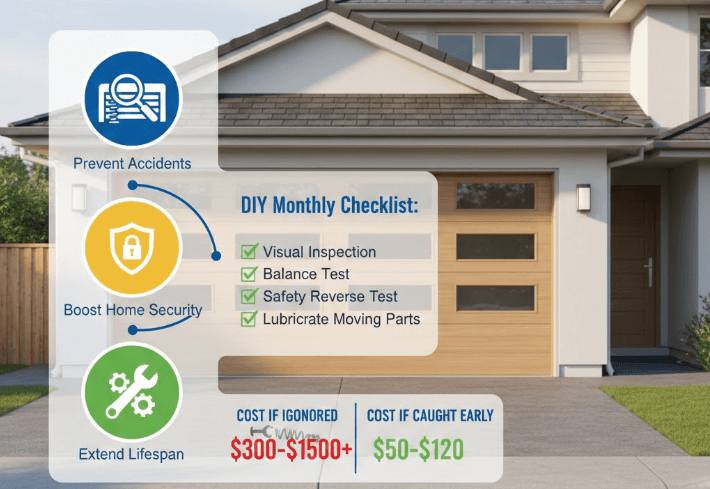
Your garage door is one of the heaviest and most frequently used moving parts in your home yet it is often neglected. Without proper care, it can pose safety hazards, cause breakdowns, and weaken home security. Preventing these issues does not require expert tools or significant time. A quick monthly garage door inspection checklist helps you catch small problems before they become costly.
This guide explains how simple steps protect your family, reduce wear, and extend the life of your door. Whether you are a new homeowner or looking to reduce repairs, these tips are essential for safety and saving money.
Table of Contents
Many homeowners think of their garage door as just a part of the house that opens and closes. But when you consider that it’s the largest moving object in your home and it may open several times a day, it’s clear that safety should come first.
Garage doors can weigh hundreds of pounds. If something fails, the results can be dangerous or even deadly. They also serve as one of the main access points to your home. If they’re not working right, they can become easy targets for break-ins.
Investing just a little time into regular garage door inspections can keep your household safe, prevent property damage, and give you peace of mind.
Common Garage Door Hazards Homeowners Overlook
Many garage door issues happen slowly over time, and because the door still opens and closes, homeowners assume everything is fine. But here are some risks that often go unnoticed:
- Worn-out springs or cables: These bear the door’s weight. If they snap, the door could crash down.
- Misaligned tracks: When the door doesn’t glide smoothly, it can jump off the tracks.
- Broken sensors: These should stop the door if something is in its path. If they fail, children, pets, or vehicles could be at risk.
- Loose hardware: Nuts, bolts, and brackets come loose from vibration. Left unchecked, they can cause parts to fail.
- Rust or corrosion: Especially in humid areas, this can weaken metal parts over time.
These aren’t just mechanical problems, they’re safety hazards. Regular inspections help catch them before they cause accidents.
Top Signs Your Garage Door Needs Attention
Spotting early warning signs is one of the biggest benefits of routine inspections. Look out for:
- Jerky or uneven door movement
- Loud grinding or screeching noises
- Sagging sections in the door panels
- Delays in response when using the opener
- The door doesn’t close all the way or reverses suddenly
- Frayed cables or visible rust
- Worn weather seals are letting in drafts or water
These signs don’t mean your garage door is beyond saving. But they do mean it’s time to act.
How Regular Inspections Prevent Accidents
Every year, thousands of injuries happen due to garage doors. Children get caught underneath. Doors fall unexpectedly. Springs snap. Most of these accidents are preventable.
- Routine inspections allow you to:
- Test the safety reverse system
- Check the balance of the door
- Inspect all moving parts for wear and tear
- Replace fraying cables before they break
- Ensure sensors and openers work properly
The goal is simple: catch issues before they become dangers. Just like you’d inspect your brakes before a long road trip, your garage door deserves the same care.
Improving Home Security With a Well-Inspected Door
Garage doors are one of the top entry points for burglars. An old or faulty door with loose locks or a broken opener is a welcome mat for intruders.
- Through regular inspections, you can:
- Make sure your remote and keypad are functioning correctly
- Tighten up lock systems and hinges
- Ensure the door closes fully and securely
- Replace outdated opener systems with rolling code technology
- Add smart controls to monitor and close your door remotely
A garage door that’s properly maintained does more than look good, it protects your family and valuables.
Boosting Garage Door Lifespan Through Routine Ch
A garage door system can last 15–30 years, but only if it’s well-maintained. Neglect cuts that lifespan in half, leading to premature repairs or full replacement.
With inspections, you’ll:
- Keep rollers and hinges properly lubricated
- Identify worn parts before they damage others
- Adjust springs and cables to avoid unbalanced wear
- Prevent warping or rotting in wood doors
Think of it like changing your car’s oil. Skipping it leads to expensive repairs. But staying on top of it keeps things running smoothly for years.
DIY Garage Door Safety Checklist
Here’s a simple monthly checklist you can follow to stay ahead of problems:
- Visual Inspection – Look for frayed cables, bent tracks, loose bolts, and rust
- Balance Test – Disconnect the opener and manually lift the door. It should lift easily and stay halfway open
- Reverse Test – Place a 2×4 under the door. It should reverse when it touches it
- Photo Eye Test – Block the sensor with your hand while closing. The door should reverse
- Lubricate – Apply garage-safe lubricant to rollers, hinges, and springs
- Weather Stripping Check – Look for cracks or gaps
- Remote Battery Check – Make sure remotes and keypads respond promptly
These simple tasks take under 30 minutes and can save you from injuries and costly repairs.
When to Call a Professional Inspector
While DIY inspections are great, some issues are better handled by a trained pro. Call for help if:
- The door slams shut unexpectedly
- You hear popping, snapping, or grinding that you can’t identify
- The springs or cables are visibly damaged
- The door is off-track or sagging
- Your opener is over 10 years old and showing signs of failure
Pros have the tools and training to safely handle high-tension parts like torsion springs and can spot less obvious problems early.
Cost vs. Consequence: What Regular Inspections Save You
Skipping inspections might save money now, but it costs much more in the long run. Consider this:
| Issue | Cost If Ignored | Cost If Caught Early |
| Broken spring | $300-$500 repair + risk injury | $80-$120 for spring adjustment |
| Failed safety sensor | injury to pets/kids+ liability | $50-100 replacment |
| Track misalignment | Door replacement ($800-$1,500) | $100 replacement |
| Security failure | Break-in, theft | $0 to secure with routine checks |
Final Thoughts
It doesn’t take long to make a big difference. A few minutes each month spent inspecting your garage door can prevent injuries, protect your home, and save you thousands in unexpected repairs.
Garage door safety isn’t just a technical issue. It’s a part of smart homeownership. Whether you’re new to your house or have lived in it for years, now is always the right time to start. Begin with simple monthly checks, and don’t hesitate to call in a professional if you notice something off.
Your garage door is doing a lot more work than you think. Make sure it gets the attention it deserves, because safety, comfort, and peace of mind are always worth the effort.
FAQs
How often should I inspect my garage door?
Standard households should perform a visual check and safety test monthly to catch minor wear. Pete’s Garage Door Services suggests a comprehensive professional tune-up at least once a year to ensure high-tension components like springs and cables are adjusted for seasonal temperature shifts and heavy usage cycles.
What are signs my garage door needs maintenance?
Look for red flag symptoms such as jerky movements, loud grinding or screeching noises, and sagging panels indicating uneven weight distribution. If your door hesitates or does not close flush with the ground, it is a sign that the balance or sensors are failing. Pete’s Garage Door Services emphasizes that ignoring these early warnings leads to total system failure and higher costs.
How do I test my garage door's safety sensors?
Close the door and wave a long object through the path of the invisible beam near the bottom of the tracks. The door must immediately reverse its direction; if it continues to close, sensors are misaligned, dirty, or faulty. The experts at Pete’s Garage Door Services can realign sensors and test the logic board to ensure modern safety standards are met.
Why is my garage door making loud noises?
Excessive noise is caused by metal-on-metal friction from unlubricated hinges, worn rollers, or a loose chain drive hitting the rail. Clunking sounds point to a failing torsion spring while high-pitched screeching indicates rollers are dragging rather than spinning. Pete’s Garage Door Services recommends upgrading to nylon rollers to dampen operation noise and provide a smoother glide.
Can I perform garage door maintenance myself?
You can safely handle tasks like lubricating hinges, tightening loose hardware, and cleaning tracks of debris. However, issues involving torsion springs, bottom brackets, or lifting cables must never be a DIY project due to extreme mechanical tension. Pete’s Garage Door Services specializes in these high-risk repairs with the specialized tools and training necessary to handle heavy-duty components safely.
How do I ensure my garage door is secure?
Boost security by upgrading to a smart opener with rolling code technology and real-time smartphone alerts. Ensure your emergency release cord is not accessible from the outside and verify that door locks fully engage when closed. Maintaining a well-aligned system ensures no gaps are left at the top or sides for intruders to exploit.
What should I do if my garage door is off track?
Stop using the door immediately and disconnect the power to the opener to prevent motor burnout or the door crashing down. This is a critical safety hazard that requires a professional to reset cables and realign the vertical and horizontal tracks. Attempting to force an off-track door closed can permanently warp the panels and ruin the entire system.
How can I extend the life of my garage door?
Maximize longevity through consistent lubrication and maintaining perfect balance so the motor does not work overtime. Keep tracks clean and hardware tight to prevent vibration damage that leads to premature part failure. A door that is professionally serviced and kept in balance can last 20 to 30 years.
Is it necessary to replace both garage door springs?
Apply a light coating of silicone-based lubricant every few months to prevent rust and friction-related snapping. Regularly check door balance by lifting it halfway manually; if it slides down or flies up, the spring tension is incorrect. Because springs have a limited cycle life, annual professional tension checks prevent unexpected breaks.
How to Lubricate Garage Door Rollers?
Use a specialized garage door lubricant or white lithium grease rather than WD-40 which can attract dirt. Apply the spray directly to the roller bearings and wipe away excess to prevent drips. Keeping bearings moving freely reduces the load on the opener and prevents rollers from skating and wearing down the metal tracks.